
RITA attends the N.A Forum in Bologna!
29
Nov
2023
Our Italian colleagues Elisa and Gian-Luca have been proudly introducing RITA to delegates at the N.A Forum in Bologna this week. The reception has been amazing!
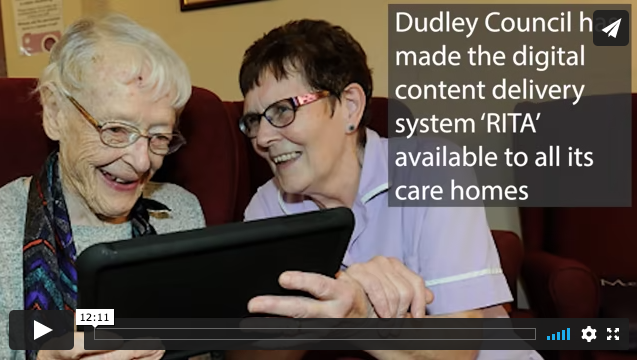
Dudley Council & RITA win Gold at iese Public Sector Transformation Awards
09
Sep
2021
Project to help care home residents living with dementia nets national award
White paper concludes that RITA directly contributed to qualitative & quantitative improvements in Care Homes in Dudley & North Tyneside
03
Dec
2020
Introducing Reminiscence Interactive Therapy Activities
Glenn Martyn Smith - RN (MH), BN (Hons), PostGradDip Nursing
Harplands Hospital - Applications of digital reminiscence therapy
01
Dec
2020
Staff at Harplands Hospital provide an insight in to how they used RITA's reminiscence and activity content to positively engage with a patient and gave him a voice again!
Withybush Further Enhances Frailty Service with Introduction of RITA
30
Nov
2020
Withybush General Hospital, based in Haverfordwest, provides acute care across Pembrokeshire to a population with high numbers of older people. Hospital admissions have been rising steadily for over a decade and there are often delays in discharging older patients, leading to outliers on medical and surgical wards. This has an adverse effect on patient care and leads to increased length of stay and increased morbidity and mortality.
Withybush joined the Acute Frailty Network in May 2018 (The first Welsh HB to do so) Since then the team has pioneered an ambitious frailty improvement project.
Addenbrooke’s Hospital reduce falls by 60% on Ward G6 with RITA
17
Nov
2020
Ward G6 at Addenbrooke’s Hospital cares for people with a wide variety of medical conditions who require admission to an acute hospital. The ward environment has been specially developed to cater better for people with delirium and dementia.
The recent acquisition of three RITA Reminiscence Interactive Therapy/Activity systems has enabled the ward to reduce falls and reduce 1-1 support. One particular patient benefitted from the person-centred content, as she no longer puts herself on the floor, which had been a regular occurrence.
The ward used RITA for an average of 12 hours per day.